3D Workspace
Home
Assets
Affiliate Program
Sign up/Log in
?
Upgrade
DCC Bridge
Anonymous1773666844
03-16 13:24
Model Name
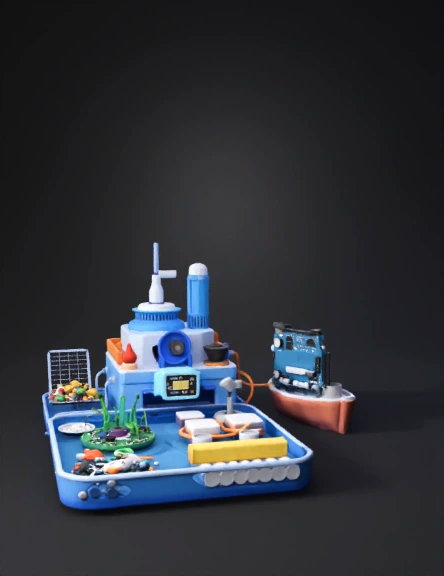
marine plastic cleanup 3d model
Tags
machine
simulation
stylized
Prompt
This project aims to reduce micro plastic pollution in ocean water and lessen its harmful effects on marine ecosystems. By targeting micro plastics, it seeks to protect marine organisms from ingesting plastic particles and the toxic chemicals attached to them, while also reducing the transfer of these toxins through the food chain to humans. The project focuses on developing innovative and sustainable methods to remove micro plastics and help preserve ocean life. Hypothesis: Using energy generated by a marine turbine, this project aims to power a system designed to reduce micro plastic pollution in the ocean. The turbine harnesses renewable ocean energy to operate the collection and filtration mechanisms, allowing the system to function sustainably without relying on external power sources By integrating clean energy with innovative micro plastic removal methods, the project supports long-term ocean purification while minimizing environmental impact. Variables: Independent Variable: Energy and plastic Dependent Variable: Amount of plastic pollution in the marine environment Controlled Variables: Water and marine life Materials Used: This project uses an Arduino-based system with components such as a water pump, DC motor, solar panel, LED lights, magnets, iron filings, oil, water, Styrofoam, and pool noodles to create a model for collecting micro plastics from water. The system was developed to recognize MATERIALS & PROCEDURES This project uses an Arduino-based system with components such as a water pump, DC moto solar panel, LED lights, magnets, iron filings, oil, water, Styrofoam, and pool noodles to create a model for collecting micro plastics from water. The system was developed to recognize micro plastics and distinguish them from harmless materials. Experiments with Ferro fluids were conducted to study how they interact with and attract micro plastics under magnetic influence. Renewable energy sources, including solar and wind power, were also tested to supply energy for the system. Additionally, the project involved coding and system design to control how micro plastics are collected, transported, and stored after removal. RESULTS & DISCUSSION The expected results of this project are that the renewable hybrid energy system will generate enough power to operate both the ship and the micro plastic cleaning system efficiently. The AI-powered camera is expected to function effectively, accurately detecting and identifying marine plastic waste to ensure Comprehensive Ocean cleaning. Additionally, the entire ship will be powered by green, renewable energy sources, making the system fully sustainable and environmentally friendly while reducing reliance on fossil fuels. CONCLUSION The model removes micro plastics from ocean water using green energy, making it both effective and environmentally sustainable. By integrating artificial intelligence, it accurately detects and collects micro plastics, helping protect marine ecosystems from pollution. Overall, the project highlights how science and engineering can work together to create innovative solutions for a cleaner, more sustainable future.
Detailed Info
Related Models
Enter invite code
Enter invite code to get credits!
 Anonymous1773666844


 Anonymous1773666844